Saturday, December 5, 2009

LAN VALIDATION.

LAN Qualification is the process of establishing appropriately documented verifications and tests that provide a high level of assurance that a computer system will operate in accordance with predefined specifications. The specific approach to be used for each level of qualification should be outlined in the project validation plan and needs to focus on the critical parameters, data, and functionality of thecomputer system. While there are no absolute lines to be drawn between qualification testing of a computer system , it is recognized that the qualifications listed below provide the necessary control and continuity throughout the validation life cycle and must be approved for the system to be released for use in the GMP environment.

a) Design qualification

b) Installation qualification

c) Operational qualification

d) Performance qualification

A Local Area Network is required to operate a server centric environment where devices (PCs etc.) positioned throughout a site buildings can connect to servers that provide specific services (print services, file services etc.). To facilitate this environment they must include one or more Gigabit routing switches which are configured in a fault tolerant configuration, providing automatic routing switch fail-over (hot redundant standby through industry standard Virtual Router Redundancy Protocol or Standby Routing Protocol). The system implements “Hot-swappable” chassis modules, allowing I.T. personnel to swap any failed module without interruption to the network.

These Gigabit switches form the core network backbone.

The backbone in turn has departmental edge switches connected into the overall backbone and again a fault tolerant configuration is implemented on the majority of these systems to enable LAN Validation..

Key Objectives.

1) Ensure that I.T. operate as a highly valued strategic asset to the company.

2) Implementation of a quality and reliable LAN Backbone.

3) Maintain full compatibility with installed base of IEEE 802.3 Ethernet nodes.

4) Implementation of IEEE 802.3z (Gigabit Ethernet) for LAN Backbone.

5) Support and implementation of IEEE 802.1D Spanning Tree Protocol.

6) Implementation of monitoring tools to establish key quality and performance metrics of the LAN Backbone.

7) High availability.

8) High level of security.

9) Scalability. Capability of aggregating a high number of Gigabit links as the company expands allowing future bandwidth requirements to be sustained.

10) IP Traffic Prioritisation.

11) Backbone routing.

12) Fault-tolerant backbone.

13) 100 Mbps switched to the desktop.

14) n) Standardisation on one networking technology

VALIDATION MASTER PLAN (VMP)

VMP RATIONALE.

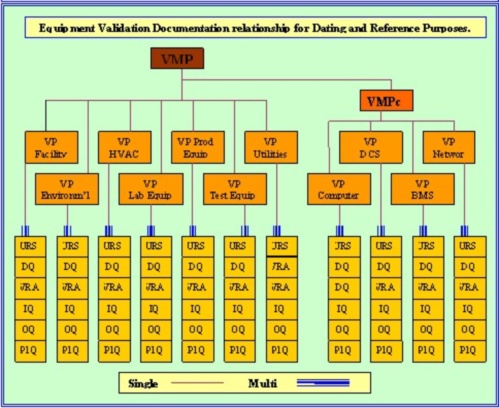
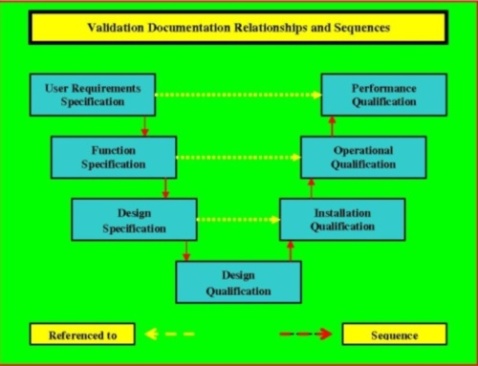
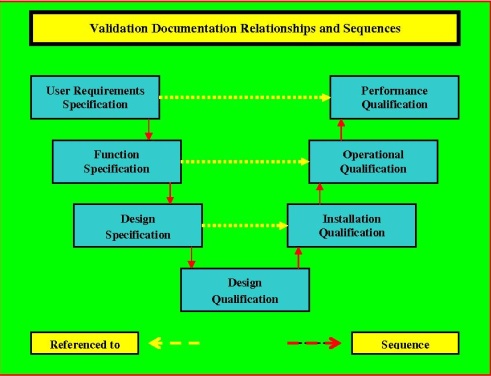
The VMP is a document that has never been mandatory, but is always one of the first documents a regulator asks to view. This is an extremely important document because in constructing it, many serious commitments and decisions have to be made. Program conceptions have to be mated to the User Requirements Specifications (URS), Level 1, 2 and or 3, these specifications have to be mated to the Validation Master Plan (VP or VMP). From these plans the Design Qualification (DQ), Installation Qualification (IQ), the Operational Qualification (OQ), and the Performance Qualifications (PQ) have to be authorized, authored, approved for content, and issued for execution. The completed documentation has to be reviewed and accepted as complete by persons authorised to execute this role. All of these functions must be detailed in the VMP, when the project concept demands that avalidation master plan is required, or the Validation Plan (VP) where it does not. Responsibilities have to be declared, people have to be nominated, and everyone involved is duly served with a copy that carries the full authority of the company. The prospective progress of the project is there for everyone to compare to the actual progress. The VMP) is a document that documents the way the company will operate, who has control over the various aspects of the validation activities, and how production, quality control, and man management will be directed.

VMP SCOPE.

The document should cover the following subjects but should not limited to them alone:
  • Introduction.
  • Plan Origin and Approval.
  • Derivation.
  • Scope of Validation Activities.
  • Validation Objectives.
  • Validation Plan Review.
  • Roles and Responsibilities.
  • An Overview of Activities.
  • Division of Responsibilities.
  • System Description.
  • Overview of System.
  • Overview of Process.
  • System Description.
  • Validation Approach.
  • Site Activities.
  • Documentation and Procedures.
  • Scope of Documentation.
  • Validation Schedule of Activities.
  • Project Master Schedule.

VALIDATION MASTER PLAN
IN THE QUALIFICATION PROCESS.

HVAC QUALIFICATION

This HVAC Qualification, Design Qualification along with the attached Standard Operating Procedure, will, chapter by chapter take you through the task of raising a fully detailed DQ document. The main body is split into fourteen tables, each one probing the design requirements and standards for the individual requirement. Safety and security along with user operability are very detailed. The document will lead you through all these design aspects allowing you to delete some you feel are not important to your equipment. It is a superbly easy document to use and will ensure that you’re DQ’s are relevant, up to date and easy to execute. Practically all the requirements are in table form. Allowing fast and clearly presented results to be obtained.


HVAC QQUALIFICATION INSTALLATION.

This combined HVAC SOP and IQ template makes it so easy for you to raise a quality IQ. With the new suite of HVAC documents from the DQ - IQ - OQ - PQ, all user friendly and ready to go, your validation life has got much simpler. The final product is a professional and comprehensive Heating Ventilation and Air Conditioning Installation Qualification Protocol. One that you can produce in less than 60 minutes. Yes, think about it, we all know how long producing IQ documents has taken in the past. There is now no reason for not being able to produce 4 to 8, IQ protocols per 8 hour day, or a complete suite in one day.

PLEASE CLICK HERE TO GO TO SHOP AND PURCHASE THIS DOCUMENT

HVAC OPERATIONAL QUALIFICATION.

This easy to use HVAC Operational Qualification SOP and Protocol, can be simply and quickly converted (using find replace techniques) into your own company bespoke document. Now you can purchase these document in a suite DQ to PQ, getting you ready at express speed to qualify a system. It has never been quicker or simpler.


HVAC PERFORMANCE QUALIFICATION.

This fully formatted HVAC Performance Qualification is the last in the chain of qualifying tests that HVAC systems are subjected to, before being considered qualified. However environmentalqualification is required to verify air quality.

FACILITIES QUALIFICATION

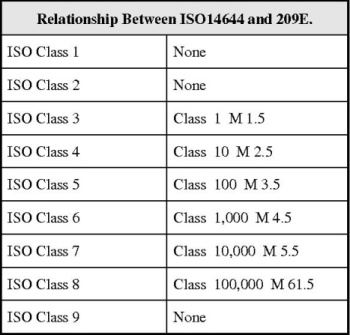
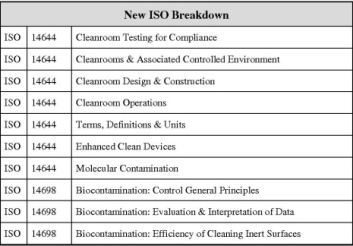
The facilities qualification, qualifies the overall manufacturing / testing / production environment. The requirement is as usual driven from the product processes. Where the product process calls for specific room condition, as defined in ISO 14644 and was in FS209E, the engineers must design the respective process area to enable these conditions to be achieved and maintained. Good engineering principles and practice must be used to protect this conditions as required, using the appropriate quality of air filtration, temperature control, humidity control, air flows control, and differential air pressures controls.
All equipment and utilities used in the process area must be listed in the Facility Qualification, along with reference to the validation documents generated during their qualification.Knowing what standards are acceptable and what is not is the key. Experience shows that the more referenced your protocols are, they better they are for execution. When you allow authors to insert unreferenced and unqualified inspections into documents such as; DQ, IQ, OQ, PQ, along with the associated VMP, URS, VRA, and VP , then you are close to being out of control.
Validation authors are there to raise protocols to verify that equipment is install, in accordance with an engineering drawing. They must use the drawing and should not call up any inspections that are nor referenced on the drawing. This way the drawing is the top document. You want to change the installation - you change the drawing - the authority to change the drawing comes through change control.When you allow authors to call up tests and inspection they think are correct, you are heading for anarchy and regulatory problems. All testing on protocols must show the authority for the test,
  • The drawing reference.
  • The cGMP reference.
  • The VMP reference.
  • The URS reference.

Just instructing authors of these facts is often sufficient to make them realize that they are not designing the equipment, a lot of thought went into the design, at the design stage. These thoughts and the resulting design specification were more than likely the subject of many peer reviews and finally company approval. They can not be altered without going through change control.

DESIGN QUALIFICATION RATIONALE

Design Qualification is used at the stage where a design that has been developed from the, VMP / URS /GAMP 5 / cGMP / and other Health and Safety Guidelines, is reviewed and documented by competent persons to ensure that the designed equipment, if built, will satisfy all the detailed specified requirements.

I have written before in these documents that certain things are critical, well here we are again. You have taken great trouble to write, and have approved, a URS and a VP (or could be VMP), now a vendor (or could be in house) has come forward and presented a design that they have prepared, and they state it will satisfy your requirements. This is where the majority of major project problems are manufactured, not obvious immediately, but materializing later in the project time line.
The Design Qualification is the only document that is going to confirm that the design will work. It must be carried out by qualified people who can challenge the design performance. If you have no such persons on your staff you must contract them in, or contract the DQ out.
When I arrive on site to manage a project, my very first task is always to get to grip with the design, get all the drawings and review them. I do this because thirty years of experience has made me very aware, that I need to know the design is good. So often this is not the case, and very often there are glaring abnormalities. When these are highlighted with the client and their vendors, only the vendors are smiling. The client had accepted the design and the vendor had quoted for that design, any changes will be extra to the quoted price. Sometimes this has run into seven figures.

A PROPER DESIGN QUALIFICATION IS ESSENTIAL TO YOUR HEALTH.

A DQ can also be used where a company has prepared a User Requirements Specification (URS) for a piece of equipment and is searching for a manufacturer, but is offered equipment Of - The - Shelf. A DG can be used to verify whether the off-the-shelf item will fully deliver the functionality detailed in the URS, and conform to the requirements specified in the VMP / GAMP4 / cGMP and other Health and Safety Notices.

DQ SCOPE.

The scope of the DQ must include but is not limited to:
  • Verification that the design will achieve the URS requirements.
  • Verification that the design is cGMP, and where software is used , conforms to the life cycle model requested in the VP and detailed in GAMP 4.
  • Verification that the design complies with the VMP.
  • Verification that the utility services required are available and validated.
  • Verification that all the required support documentation is specified.
  • Verification that the system will be calibratable.
  • Verification that the system will be maintainable.
  • Verification of operation staff training requirements.
  • Verification that the system will operate in a manner safe to both product and staff.
  • Verification that the system conforms to all applicable national standards and guidelines.

DQ IN THE VALIDATION PROCESS.

OMPUTERIZED SYSTEM DESIGN & TESTING

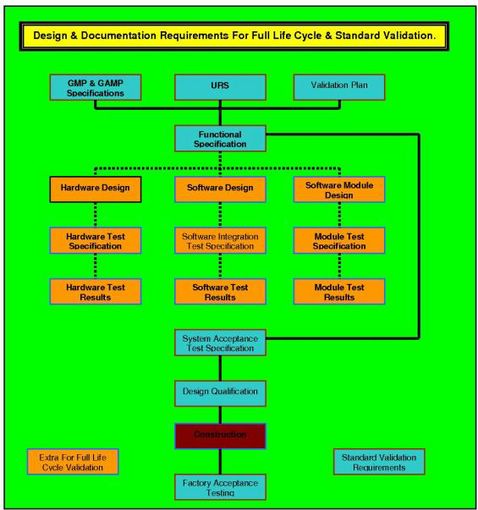
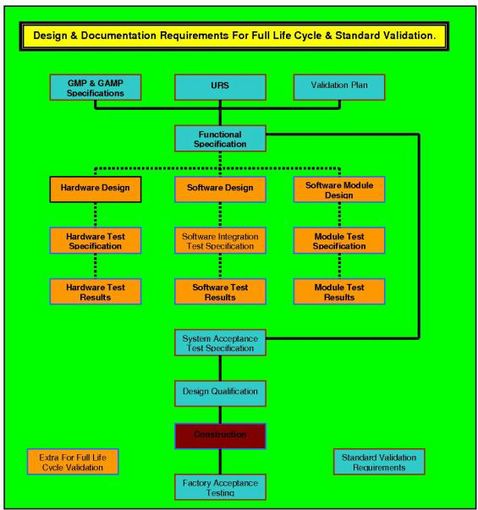
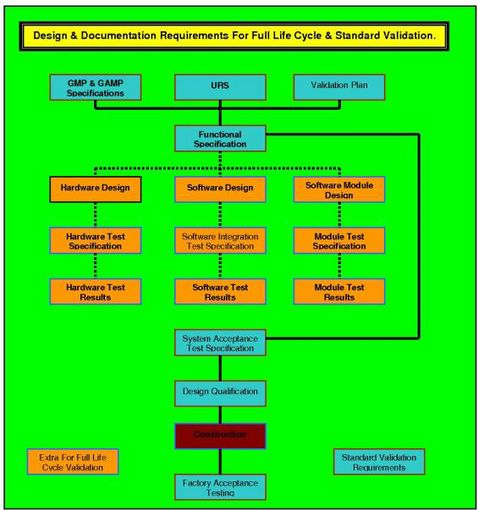
In the diagram below it can readily be seen that the URS, along with the regulatory requirements as detailed in GAMP 5, and the details of computer validation (CSV) requirements as given in the VMP, come together to form a document package consisting of the DQ, IQ, OQ and PQ from which the vendor can develop a fully legal and compliant product.
Computer validation (CSV) activities are grouped in two colours (orange and blue). The blue colour is the requirement for standard computer validation (CSV).

The regulators have decreed that software used in a manner that can affect the quality of the product, without leaving visible evidence, that damaged has occurred, must be deemed as critical to the quality of that product.

The regulators have further mandated that all such software be identified as such - and subjected from concept to actual use, to Full Life Cycle Validation (FLCV) requirements. This additional validation is represent in the diagram in orange.

The vendor therefore (be they in, or out, of house), must produce a Quality Plan that ensures the software development will follow a validation evolution similar to that shown in the diagram. Your actual diagram must be planned and justified for the software system that you are proposing.

It is of paramount importance that your decision on software criticality is documented, and that your QP is reviewed and approved by QA, and the client or their representative, prior to initiation of the design process. Since these documents all form part of the computer validation (CSV) process, you must expect the regulators to want to review them.

COMPUTER VALIDATION SCOPE (CSV)

Computer Validation (CSV), must include the under listed tests / inspections, but is not limited to them alone. The inclusion of the 21 CFR Part 11, Applicability is deliberate. This allows the executor of the computer validation (CSV) protocols to clear this requirement by cross referencing the risk assessment reference number and stating Yes or No, to the applicability question. The regulator now does not have to search further, he can see that requirements for 21 CFR Part 11 have been considered and judged.
  • Introduction.
  • Scope.
  • Software Verification.
  • Hardware Verification.
  • Testing Personnel CV & Details Sheet.
  • 21 21 CFR Applicability.
  • Backup Software Storage Security.
  • Menu Navigation.
  • Operating Environment.
  • System Security (physical/access to data).
  • Power Failure Recovery.
  • Test Alarms.
  • System Stress Testing / Boundary Test.
  • Interface Signals.
  • Menu Navigation.
  • 21 21 CFR Part 11 Conformance.
  • Functionality tests.
There is a degree of flexibility in deciding precisely at what stage in the validation process some of these test and inspections are executed. Where this flexibility exists the choice between the IQ or OQ or PQ, must be rationalized and documented in the validation master plan (VMP) or the validation plan (VP).

CONTENTIOUS POINTS IN VALIDIZATION

REVALIDATION SCHEDULED

As long as the process operates in a state of GMP control and no changes have been made to the process or output product, the process does not have to be revalidated. Whether the process is operating in a state of control is determined by analyzing day-to-dayprocess control data and any finished device testing data for conformance with specifications and for variability.

REVALIDATION on RELOCATION

When equipment is moved to a new location, installation and operation should be requalified. By comparing data from the original installation and operation qualification (IQ and OQ) and the requalification, the manufacturer can determine whether there have been any changes in equipment performance as a result of the move. Changes in equipment performance should be evaluated to determine whether it is necessary to revalidate the process.

REVALIDATION JUSTIFICATION

Part 820.75 of the QS regulation requires that validated processes be monitored and controlled so that when changes or process deviations occur, a manufacturer will know to review and evaluate the process and perform revalidation when appropriate. 21 CFR 820.75(c ) requires you to have documented procedures in place for evaluating; when revalidation is required.


PROCUREMENT AND VALIDATION.

Recent research has highlighted that in the pharmaceutical and bio-medical industry, thirty two percent of all equipment procurements are unsatisfactory. The major problem has been identified as companies not specifying in sufficient detail and or accuracy, what their actual needs are. The lack of a quality company approved UserRequirements Specification (URS), leads to many companies having to resort to otherwise un-necessary and costly retrospective actions in modifying the equipment or producing unspecifieddocumentation or engineering drawings, post procurement. These extraneous GMP requirements often cost more than the equipment.

COMPUTER VALIDATION USER REQUIREMENTS

The software requirements specification document should contain a written definition of the software functions. It is not possible to validate software without predetermined and documented softwarerequirements. Typical software requirements specify the following:
  1. All software system inputs;
  2. All software system outputs;
  3. All functions that the software system will perform;
  4. All performance requirements that the software will meet, (e.g., data throughput,
    reliability, and timing);
  5. The definition of all external and user interfaces, as well as any internal software-
    to-system interfaces;
  6. How users will interact with the system;
  7. What constitutes an error and how errors should be handled;
  8. Required response times;
  9. The intended operating environment for the software, if this is a design
    constraint (e.g., hardware platform, operating system);
  10. All ranges, limits, defaults, and specific values that the software will accept;
  11. All safety related requirements, specifications, features, or functions that will be
    implemented in software.

DEFINE VALIDATION

Validation Online's GMP compliant computer validation (CSV) documentation and protocols start with our unique three level User Requirements Specification document (URS). Since most documents, post the URS, will either fully, or partially, base their contents on the URS, it is essential that this document clearly, concisely and in a manner that is testable, specifies the exactrequirements of the end user. It is also essential that these exact testable requirements remain attributable through the development of the Functional Specification (FS) Design Specification (DS) to the actual lines or groups of lines of code that enable them.
The Validation Master Plan - VMP, must be specific about this and all GMP requirements, and instruct all personnel involved in the qualification program, of the importance of maintaining this traceability through the Installation Qualification - IQ - Operational Qualification - OQ - Performance Qualification - PQ.
Traceabilty of URS functionality, to lines of code is an essential element in computer validation (CSV). Once this traceability is establish future maintenace and modification of software is made much simpler and more manageable.

WHAT IS VALIDATION

WHAT IS VALIDATION.

The guide-lines laid out in Good Automated Manufacturing Practices GAMP, GAMP 5, for the computer validation of automated systems including automatic computerized manufacturing equipment, control systems, automated laboratory systems, manufacturing execution systems and computers running laboratory or database systems. The automatic computerized system generally consists of the hardware, software and network components, together with the controlled functions and associated documentation. The recent release of GAMP 5 Procedures does not really over turn the previous release GAMP 4. Allthough GAMP 5 is definitely a handy guide, it does try to be all things to all people.

Which at times means certain sections can appear to contradict others.
On a recent project when a group was set up to develop a Risk Assessment (RA) document from GAMP 4, after four weeks they were still divided and unable to reconcile the requirements. It bodes well to always remember that GAMP 5 is a guide from the end users point of view. The actual legal requirements come from the regulators, and obviously takes precedence.
Validation Online's computer validation (CSV) protocols start with the development of a detailed three layer URS and progress through the VMP - IQ - OQ - PQ. Each of these documents are interactive and simple to use. Each are preceded with an SOP which guides the user through all phases of protocol generation.
The verification that the end users requirements as detailed in the URS have been fully satisfied, is paramount to the equipment being correctly qualified. Often this is hard to verify since the traceability from URS functionality to the actual hardware or software utilized is lost in the code generation stage.

However unless the effort is made to maintain this traceability, validation is flawed and future modifications can become problematic.

The Validation Master Plan - VMP, must be specific about this requirement and instruct all personnel involved in the qualification program, of the importance of maintaining this traceability.

VALIDATION PLAN

VP PLAN SCOPE.

The Validation Master Plan (VMP) is the most important documents because it describes the basis concept for your overall site validation programme. This interactive detailed document is a delight and simple to use. The generic template and attached SOP lead you through the whole process quickly and seamlessly. This thirty page document is suitable for all types of pharmaceutical /biotechnical / medical device / API, manufacturer and or processer. The VMP addresses processvalidation, facility validation, utility validation, equipment qualification and cleaning validation. The objective is to define responsibilities, outline your methods involved in the qualification and validation of your facility, define the areas and systems to be qualified and validated and to provide a programme for achieving and maintaining a validated status.


THE VP ROLE IN THE VALIDATION PROCESS.

IT THEN PROGRESSES TO

Performance Qualification

The scope of the P1Q (the 1 or 2 is used to negate confusion between P1Q), and Process Qualification (P2Q).
P1Q is performed after successful completion of the Installation qualification (IQ)and Operational Qualifications (OQ) execution. The testing carried out is targeted at verifying that the performance specified in the URS is being delivered. Verification is also required to confirm the requirements specified in cGMP’s, health and safety rules and other guidance documents. Test objectives, acceptance criteria and methodologies must all be specified and pre-approved.
Performance Qualification (P1Q) is often used to qualify equipment throughout the full range of the equipment capabilities ,as opposed to process qualification, that is only concerned about capabilities that the process under validation uses.

P1Q SCOPE.

The normal expectations for Performance qualification (PQ) are given as requiring, documented verification that facilities, systems and equipment, as connected together, can perform effectively and reproducibly, based on the approved process method and product specification. Onto that now should be grafted The verification that the all the requirements specified in the User Requirements Specification (URS) have been fully complied with.

The P1Q represents the final qualification of your equipment or system. This incorporates a range of testing to simulate your production process options and provide assurance that your systems and your operating documentation, are capable of subsequent process validation activities. It is used to establish and or confirm;
  1. Definition of performance criteria and test procedures.
  2. Selection of critical parameters, with predefined specifications.
  3. Determination of the test intervals, e.g.,
    (a) - Everyday.
    (b) - Every time the system is used.
    (c) - Before, between and after a series of runs.
  4. Define corrective actions on what to do if the system does not meet the established criteria.


P1Q RELATIONSHIPS.

Performance Qualification of LC Systems

Chromatographers can use a simple set of tests to check system performance.

Users of liquid chromatography (LC) systems have two compelling reasons to ensure that their systems are working properly. First, good science — why would anyone want to perform LC experiments on a system that isn’t working at its best?

Author(s):
Gerald Hall, PerkinElmer Instruments Inc., Shelton, Connecticut, USA,John W. Dolan, LC Resources Inc., Walnut Creek, California, USA.
Journal:
LC•GC Europe Read more

Flow, Pressure, and Temperature Calibration

In this first of a two-part installment, John Hinshaw discusses the relative effects that inlet pressures and oven temperatures have o­n capillary gas chromatography.

For full article Click Here

In last month’s installment of “GC Connections,” John Hinshaw discussed how peak retention times depend upon relationships between pre s s u re, flow rate, oven temperature , column dimensions, and stationary phase. This concluding installment of a two-part series discusses the effects that column variability has o­n isothermal capillary gas c h romatography and e x p l o res instrument calibration with the goal of maximizing instrument-toinstrument similarity of retention times.

For full article Click Here

Author(s):
John V. Hinshaw .

Qualification of a Chromatographic Column: Why and How to Do It

FDA has become more knowledgeable about process chromatography — and more demanding about column qualification. In the latest installment of BioPharm International's "Element of BioPharmaceutical Production," five industry experts share their insights o­n how to qualify a chromatographic column. Their advice: Write unambiguous SOPs. Focus o­n reproducibility of column packing. Choose appropriate metrics. And analyze your testing procedures to reduce the chance of erroneous results.

For full article Click Here

Author(s):
Anurag Rathore, Pharmacia Corporation.
Journal:
BioPharm International,

An Overlooked Source of Services: Equipment Vendors

Biopharmaceutical companies often look to specialized contract service companies to help them meet regulations, before and after market approval, and to maximize their resources. But they may be overlooking the expertise of their process equipment suppliers. Aside from equipment, some suppliers also provide consulting services for equipment documentation, process validation, automation, and compliance.

The September 2003 draft guidance "Sterile Drug Products Produced by Aseptic Processing" recommends that drug manufacturers validate their sterilizing filtration processes specific to each drug, but it also acknowledges that suitable testing is probably beyond the capabilities of most drug manufacturers. This work can be outsourced, and FDA has recognized that some filter suppliers are experts in validation.

It is an established practice for qualified filter suppliers to conduct drug product-specific bacteria or mycoplasma retention testing; related tests for filter compatibility, extractables, and integrity test values; and to provide "FDA-ready" documentation substantiating that the selected filters can sterilize the drug product.

With the emergence of new technologies, suppliers are providing even more extensive validation documentation and services. For example, to make sterile pathways, drug manufacturers historically have relied on manual tubing connections; this approach requires specialized capital equipment — laminar flow HEPA filtered hoods and tubing welders, for example — and highly trained operators. With the introduction of new aseptic connection devices, sterile pathways can be created on the open production floor without extensive training. These devices can provide a higher level of sterility assurance, they are free of capital costs, and they allow aseptic connections to be more easily performed.

The question for any new technology is how to validate it. Suppliers can apply the worst-case uses of their products and conduct, in advance, all the applicable validation work at their own facilities. Thereafter, the supplier's product is launched with much of the user's validation work already documented.

This greater degree of supplier testing and documentation is a significant advance. Today, suppliers are helping users meet 21 CFR Part 11 regulations for electronic records. The "Good Automated Manufacturing Practice Guide for Validation of Automated Systems" was developed by an industry forum and establishes how suppliers' design and development documentation can eliminate users' need to generate their own. Beyond easing the drug manufacturers' documentation and validation learning curve, this practice is also more cost effective. The supplier does it once and costs can be spread broadly among its many customers.

Suppliers are also expanding their consulting services, such as troubleshooting and pre-inspection reviews of equipment usage. One supplier provides experts who visit a plant to review equipment usage, record observations, and provide recommendations to the client. This is a cost-effective means to reduce adverse FDA observations and retrieve information which can, in the event of a compliance issue, help scientifically justify a manufacturing practice.

With the pharmaceutical industry becoming increasingly globalized, major suppliers must prepare themselves to support customers everywhere. They must monitor regulatory practices in Canada, Europe, Australia, Japan, and elsewhere. Although equipment usage, validation, and compliance requirements tend to have commonalities worldwide, local support is necessary to ensure sensitivity to national regulations or regional practices and to allow the supplier to provide an approach that is applicable globally.

Major equipment suppliers can play an important role in helping pharmaceutical manufacturers meet diverse requirements. Many are experts in the technology they offer, including its use. Ultimately, that expertise is what regulators want drug manufacturers to have. Obtaining that knowledge from suppliers is faster, easier, and more cost effective than when users try to develop it internally. Global suppliers are focusing on expanding their offerings by providing related services. The pharmaceutical industry will benefit by viewing their equipment suppliers as experts in the validation and compliant use of their equipment — not simply as vendors. BPI

For full article Click Here

Author(s):
Jerold M. Martin .

Independence rules (or Rules for independence) : Validation and Calibration

A.M.C. Davies
When we have developed a multivariate calibration it is essential that the performance of the calibration is tested with a set of samples which are typical and independent. This set has several names but I prefer "Validation set". If you are satisfied with the predictions o­n these samples then you will daim that you have "Validated" the calibration, which suggests that you expect it to continue to give useful results in the future.

For full article
Click Here

Author(s):
A.M.C. Davies.

IQ Validation Test Procedure

One of the greatest value added services an equipment qualification protocol can provide is the verification of accurate system and/or equipment drawings. Often contractors and vendors supply ‘as-builts’ as part of a job or project. Unfortunately however, changes are often made even after the as-builts were delivered or errors/omissions occurred in the original drawings. This test procedure can be included in an Installation Qualification as a means of verifying the accuracy of the as-built drawings.The following validation test procedure from our ValPro™ library is submitted for your use and review.

For full article Click Here

Author(s):
Jon R. Voss.

The Sturtevant Sanitary Design Micronizer Still the Only USDA-Dairy-Accepted Jet

ISPE, September 1998 Sturtevant, Inc., manufacturers of the Sanitary Design Micronizer® (SDM) has continued to develop the o­nly USDA-DAIRY accepted jet mill by custom engineering solutions for its customers. By working to solve special application problems, Sturtevant continues to advance the sanitary design features of the SDM to meet the stringent industry needs. Originally, Sturtevant engineered the stainless steel SDM especially for the pharmaceutical industry in response to a customer request.


For more information Click Here

Author(s):
Sturtevant, Inc.,

Performance Qualification of a Vial Washer

A vial washer is a relatively simple machine commonly used to clean containers during the manufacture of dosage form drugs. Some drug manufacturers o­nly perform Installation Qualification (IQ) and Operational Qualification (OQ) of the machine as no regulatory requirements clearly state that the performance of the vial washer should be qualified. Although depyrogenation may be achieved using a heating tunnel or oven, if the washing process cannot remove chemical contaminants or particles, they will produce a pyretic response in humans or animals, although there are no pyrogens present. Some drug manufacturers may perform a qualitative trace study for coloring matter in washed vials using a white wiper to verify the performance of the washer, but it is not a quantitative method to reflect the actual performance of the washer for particles, endotoxin, and chemical contaminants.

For full article Click Here

Author(s):
Lu Liqiang.
Journal:
Journal of Validation Technology Volume 8 Number 2 February 2002 .

Laboratory Equipment Qualification

The main goal in qualifying laboratory equipment is to ensure the validity of data.The current equipment qualification programs and procedures used within the pharmaceutical industry are based o­n regulatory requirements, voluntary standards, vendor practices, and industry practices.The result is considerable variation in the way pharmaceutical companies approach the qualification of laboratory equipment and the way they interpret the often vague requirements.The authors summarize the conclusions of the PhRMA Workshop o­n Acceptable Analytical Practices for the topic “Qualification of Laboratory Equipment.” They describe the areas ofagreement and offer options for areas in which there is variation o­n what is appropriate.


For full article Click Here


Author(s):
Kenneth W. Sigvardson, Joseph A. Manalo,Robert W. Roller, Fatieh Saless, and David Wasserman.